
Campaigns
The things we are asking people to change.
A campaign is one harm, named in public, with an argument for why it should stop and a description of what we are doing about it. Each one is written to be read by someone who is not already convinced.
Every campaign ends with the specific next step for that issue — guidance to read, a way to take part, or the help pages if what it describes is happening to you.
Why we run them
A broad mission needs specific arguments.
“Online abuse” is too large to act on. Nobody wakes up intending to reduce online abuse in general. They recognise a particular thing — a pile-on, a deepfake, a child who will not say what is wrong — and want that thing to be different.
A campaign is how we make the general argument specific enough to act on. It names one harm, says who it falls on, and sets out what would have to change. Some of that change is ours to make. Most of it is not, which is why campaigns are public rather than internal.
Taking part in a campaign is not the same as joining the movement, and neither requires the other.
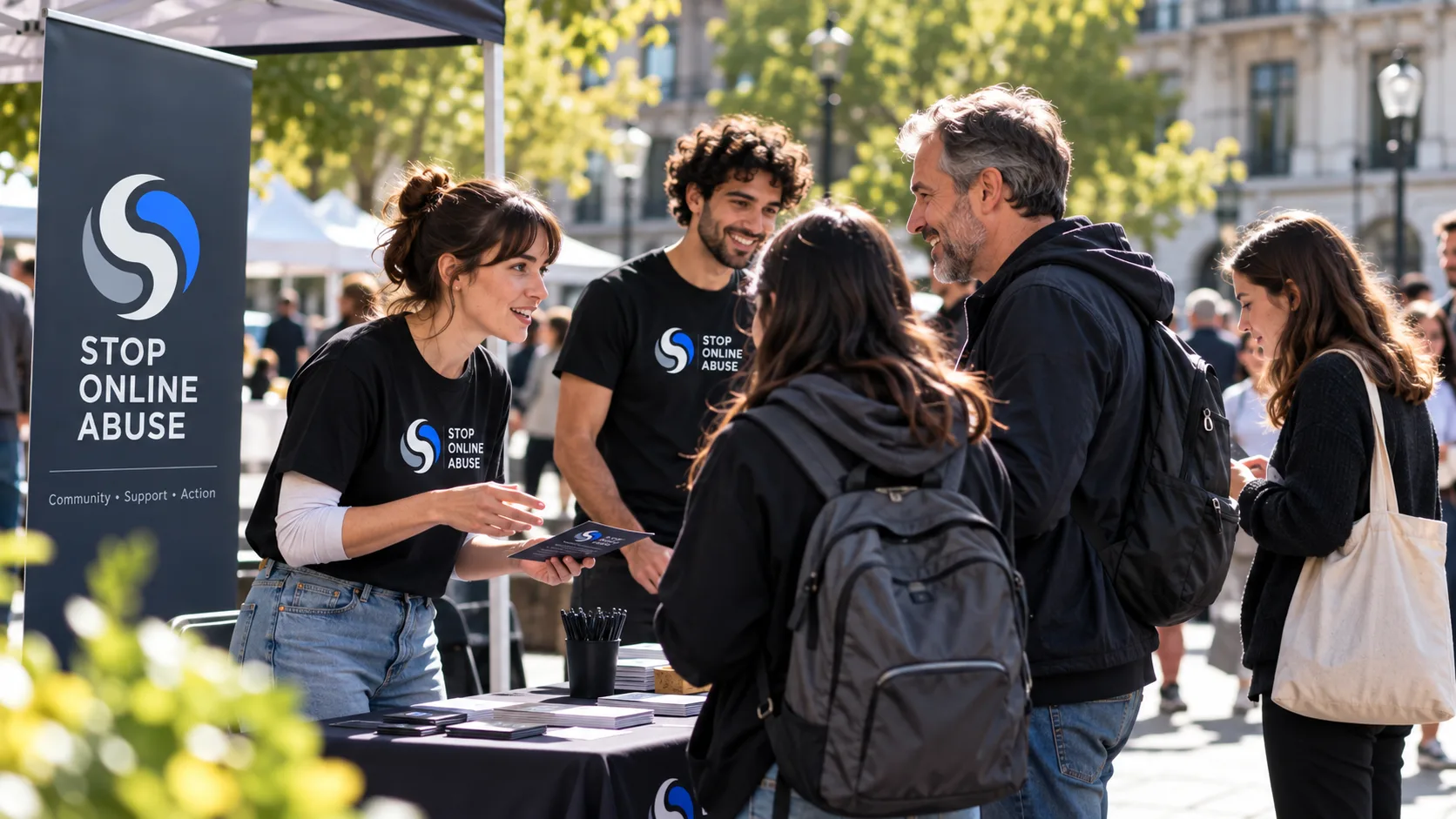
Running now
What we are campaigning on.
Each of these is live. Follow one to read the argument and find the step that fits your situation.
- Creator SafetyProtection for the people who build an audience — and become a target for it.
- Digital RespectShift online norms from abuse to respect and accountability.
- Protect Kids OnlineSafer digital spaces for children, in classrooms and at home.
- Stop DeepfakesEnd the weaponization of synthetic media against real people.
Campaigns are where the principles stop being principles.
Everything else on this site describes what we believe about online safety. A campaign is the part where we say one specific thing publicly, in a way that can be agreed with or argued against, and where what we are asking for is small enough that somebody could actually do it.